TWIM

Blog

Your blog category

Adam Eurich and Cassandra Gearhart Ph.D. standing side by side, smiling and looking relaxed and happy at the camera

Easter TWIM Meditation Retreat, Apr 3-12, 2026

Step away from daily demands and enter a supportive environment for tranquility and insight. ————————————————————————————————————————————————— Registration is open for all levels  for 10-days, 9-nights, near San Jose California with Cassandra Gearhart, Ph.D. and Adam Eurich. Set on 70 acres of rolling hills, vineyards, shaded walking and hiking paths, this retreat offers an ideal setting for […]

Easter TWIM Meditation Retreat, Apr 3-12, 2026 Read More »

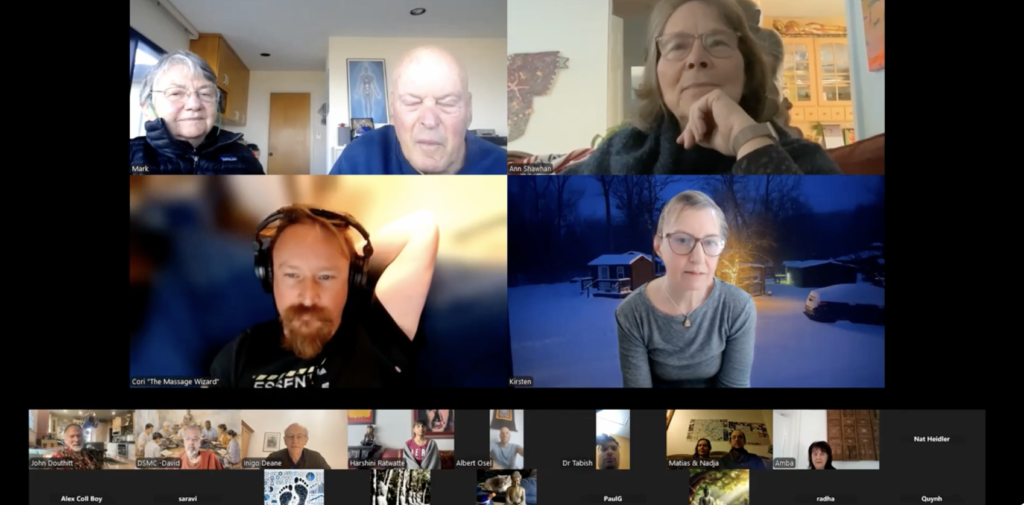
Tuesday Practice Circle with Kristen Jones 2/10/26

The Five Illusionists: inlcudes Sutta Reading, Discussion, and Meditation —————————————————————————————————————————————————— This week’s Dharma talk, Kristen Jones explores how ordinary people become trapped by the belief in a solid and permanent self. Drawing on early Buddhist psychology, the talk explains how clinging to the five aggregates—body, feeling, perception, volitional formations, and consciousness—creates the sense of “me”

Tuesday Practice Circle with Kristen Jones 2/10/26 Read More »

Tuesday Practice Circle with Kristen Jones 2/3/26

Ways of Regarding Things, SN 22.47, Sutta Reading with Discussion and Meditation Group ———————————————————————————————————————————————— In this short discourse, the Buddha explains how a mistaken sense of “I” arises. Kirsten expailes how it is sustained by clinging to the five aggregates—form (body), feeling, perception, volitional formations, and consciousness. First, an uninstructed person, unfamiliar with noble training

Tuesday Practice Circle with Kristen Jones 2/3/26 Read More »

Delson Armstrong on the Sense of Self, Control, and Conceit

In this Dharma talk, Delson Armstrong presents a detailed analysis of anatta (not-self) and conceit (māna) using key suttas from the Pāli Canon. First, he explains the difference between abandoning self-view and removing the subtle sense of “I am.” He shows how the five aggregates—form, feeling, perception, formations, and consciousness—become objects of identification. As a

Delson Armstrong on the Sense of Self, Control, and Conceit Read More »