
Learn TWIM
Tranquil Wisdom Insight Meditation (TWIM) integrates loving-kindness with mindfulness and tranquility in a gentle, sutta-based system rooted in the Buddha’s earliest teachings.
First, TWIM teaches you to establish loving-kindness (mettā) as your meditation home base. Then, you learn to work skillfully with distraction rather than suppressing it. This step-by-step method, known as the Six Rs, helps dissolve habitual stress reactions such as anxiety and emotional reactivity. With consistent practice, calm awareness, spontaneous joy, and equanimity naturally arise.
As a result, TWIM develops both tranquility (samatha) and insight (vipassanā). Therefore, it is effective for dissoloving unwholesome mental states and cultivating the goal of seven factors of awakening. Instruction provides practical guidance for sitting and walking meditation, including how to manifest tranquility, sustain loving-kindness, and return minds attention to the present moment when distracted.
For meditators who seek more than temporary relief, the TWIM practice provides a clear and repeatable framework for deep meditative experiences. With the development of awareness jhanas, it progresses into and through the stages of insight culminating in transendential awakening.

Part A
How to Practice TWIM
Prepare for seated meditation
Sit comfortably in a quiet, private place where you won’t be interrupted. Use pillows or ear plugs if it’s helpful.
- Set timer for 15 to 30 minutes to start. Gradually increase time to deepen the benifits.
- Sit comfortably on chair with your back naturally straight, but not stiff. Sit cross legged if you prefer.
- Close your eyes and commit to remaining motionless without figeting or shifting for the entire mediation.
- Soften your whole body as if you were sinking into a warm bath or lying down to rest.
- Do nothing for 2-3 minutes. Settles into a state of ease.
- Direct your attention to your whole body from head to toe. This is whole body awareness. Soften to release any tension, tightness or pain in the palvis, shoulders, head, and neck.
- Scan the whole body 3 or 4 repeating the porcess of relaxing.
- Breathe naturally without controlling it.
Goal: Get as comfortable and possible and remain motionaless.
Develop Home Base or Object of Meditation
Direct your attention to a feeling of metta. a This is a loving, kind, and friendly feeling to use as your home base for meditation. Metta is a the pleasant sensation we feel in out mind and heart when we smile.
This feeling in the mind is the home base for the meditation. Smile a little to spark the feeling of metta. Watch the feeling with your awareness and enjoy it without controlling it.
Another way too spark the feeling of metta: make a simple, sincere wish for your own well-being and feel it. Example:“May I be kind to myself.” or “May I be happy.” or “May I be free of all problems. Use anything the eliciates a pleaeent feeling the make you smile.
Make your wish be heartfelt and sincere. Feel the emotional tone of kindness in yourd.
Any degree of metta works perfectly weather its intense or hardly noticable. Simply pay attention to the metta feeling like watching a sunrise across a vast ocean.
Goal: Be aware of feeling metta for as long as possible.
Helpful Guidelines for Success
If the feeling of metta is difficult to achieve, try recalling a moment when you felt natural friendliness or kindness.
EXAMPLE: holding a baby, hugging a pet, or resting peacefully in a hot tub. Allow that sweet memory to bring a warm metta feeling into your mind and heart. This will make you smile. Relax into this pleasant sensation.
Remember this feeling to use throughout TWIM practice.
Allow the feeling to flow naturally, inward and outward, throughout your awareness. Don’t try to hold onto it or make it stronger. Simply pay attention to it like watching a waves on the ocean.
This is mindfulness of metta practice
— Go to Next Section —

Part B
How to Deal with Wondering Mind and Distractions
Engage distraction by using a step by step method called the Six Rs (6Rs). It’s a gentle and effective set of actions based on “Right Effort” as taught by the Buddha. It systematically dissolves distractions while conditioning the seven awakening factors. Importantly, the Six Rs activates tje natural de-conditioning of habitual unwholesome reactively rooted in aversion, compulsion, and delusion.
Let Go
This advise is easier said then done. Letting go of wondering thoughts and urges can be learned. With practice, it can be done successfully and repeatedly.
The first action is to recognize the attention has been distracted and is no longer on the feeling of loving-kindness. Recogniziing distractions are the doorway to letting go.
Causes of Distractions
Before the attention if fully distracted this is alway a cause. Common causes include
• Bodily discomfort
• Restlessness or boredom
• Urges to do something
Next, we start thinking about it. Thought always proceeds action to stop it b redirecting the mind back to the the object of meditation. This defeats the propose of meditation which is to stop unconsciously reacting to habitual attachments
How the Six Rs work
Everytime the Six Rs, your attention is gently returned to present moment accompanied by increased comfort, happiness, and feeling relief. With practice, your attention naturally remains collected around the feeling of loving-kindness. With practice, the attention will remain on metta of longer and longer periods. With practice, it happens automa.
Results
• De-conditions craving–the urge to change or control thoughts, emotions, or sensations
• Cultivates joy (pīti), happiness (sukha), and tranquility (upekkhā)
• Develops stable attention, emotional balance, and clear awareness–natural collectedness (samādhi)
• Supports natural entry into the stages of meditative and unification of mind (jhānas)
The Six Rs: A Meditator’s Toolkit
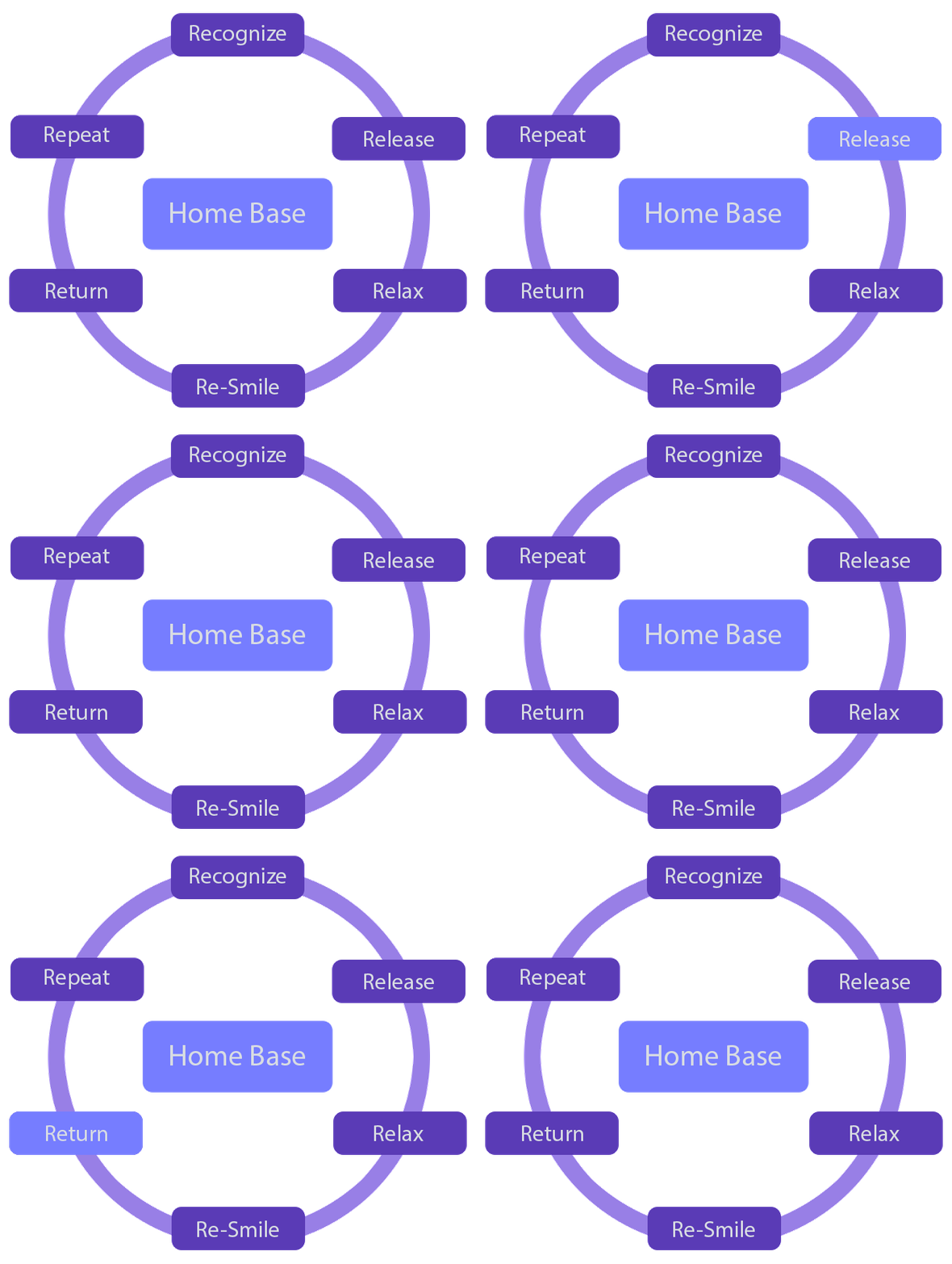
Distractions aren’t failures—they’re doorways
TWIM uses a simple, repeatable method called the Six Rs to work skillfully with distractions. Think of it like mental reset software—clearing emotional static and restoring calm, joyful awareness.
Whenever you notice your attention has fully wandered from the feeling of loving-kindness, apply the Six Rs:
1. Recognize – that your awareness has become distracted away from home base.
2. Release – Let go and abandon the distraction without resistance.
3. Relax – Soften any tension in the body form head to toe, especially in the head, neck, and shoulders.
4. Re-Smile – Lightly smile to uplift the mind.
5. Return – Gently bring your attention back to the feeling of loving-kindness in your body.
6. Repeat – Use this process whenever you attention is completely distracted from home base.
This is the essence of Right Effort (Sammā Vāyā) in the Buddha’s Noble Eightfold Path. It’s not about control or force—it’s about releasing, relaxing, and returning with wisdom (reality)—to your home base.
Distractions are Your Teachers
Observing and releasing distractions through insight into the nature of cause and effect. Craving—whether physical, emotional, or mental—is not a personal flaw, but a conditioned reaction. Using the Six Rs, meditators learn to gently recognize, release, and relax these patterns. With practice, this method gradually de-conditions the root causes of distraction, leading to calm, clarity, joy, and ultimately, awakening.
Moreover, when seen with clarity, distractions becomes a doorway to insight. With patience and practice, meditation becomes less about fighting the mind and more about understanding how it works. This understanding leads to joy, calm, and ultimately—awakening.
Results You Can Feel
Every time you use the Six Rs, you weaken the roots of distraction and reinforce clarity, balance, and joy. Over time, this process naturally cultivates the Seven Factors of Awakening,
Mindfulness
Investigation
Energy
Joy
Tranquility
Collectedness
Equanimity
This is how insight deepens and awakening unfolds—not through struggle, but through understanding and ease.

Part C
How to Practice for Best Results
Practice is the Gateway to Relief
• Practice daily, ideally when you are alert and energized
• Choose a quiet, private space where you won’t be interrupted
• Sit very comfortably with a straight back in a chair or on a cushion
• Begin with 30 minutes, increasing practice time gradually
• Stay still during the session—motionlessness conditions clarity and open the mind to penetrating insight
• Follow along with the guided instructions in the YouTube video below
Why This Matters
Most meditation techniques result in temporary calm. TWIM is different becase you are training your mind to gently undo the root causes and conditions that lead to suffering through relaxed effort—not control. The Six Rs are the heart of “exactly how to meditate regradless or what your choose as your meditative home bae. practice, and they lead directly to lasting clarity, contentment, and awakening.

Part D
Epert Guidance and Instruction

Guided loving-kindness meditations with the Six Rs
—Venerable Bhante Vimalarmsi

Brief beginning metta meditation Instructions
— David Johnson
Learn the Beginning TWIM practice from Bhante Vimalaramsi in an mp3. Download it on your mobile and learning toht practice in home, the beach, or during a flight.
