
High Altitude Meditation Retreat
Advanced Practices to Navigate Nirvana with
Delson Armstrong & Doug Kraft
July 31–August 7, 2026, San Juan Bautista, California
About the Retreat
By blending core principles such as the enlightenment factors, dependent origination, and karma, they demonstrate how these serve as vital steps toward wisdom. Delson Armstrong and Doug Kraft will provide guidance to recognize and experience states beyond the jhānas and rest in the unconditioned.
This seven-day retreat invites you to refresh and refine meditation, not by the pursuit of achievement but through the peaceful act of letting go and discovery. It is found through the natural intelligence in each conscious state. These states of awakened awareness form the foundation of all experience. Delson calls this “that-ness”, a presence that infuses every moment with the essence of nirvana.
High Altitude Meditation retreat invites you to set aside preconceptions, examine inner patterns, and rediscover a living presence of awareness itself. Delson and Doug discuss and explore how to bring stability, wisdom, and ease into meditation and everyday life. This approach welcomes routine activities as important and instrumental opportunities for awakening. Thoughtful interactive group dialog and critical thinking makes this retreat distinctive.
The course structure is ideal for dedicated practitioners to move beyond belief and techniques by cultivating deeper understanding through exploration and experience leading to insight and awakening.
Themes and Subjects
• Working skillfully with distractions
• Objectless meditation
• Awakening factors
• Karma and causality
• The nature of subjective experience
• Nirvana as an object
• Beyond the jhānas
• Stabilizing in the unconditioned
About the Teachers
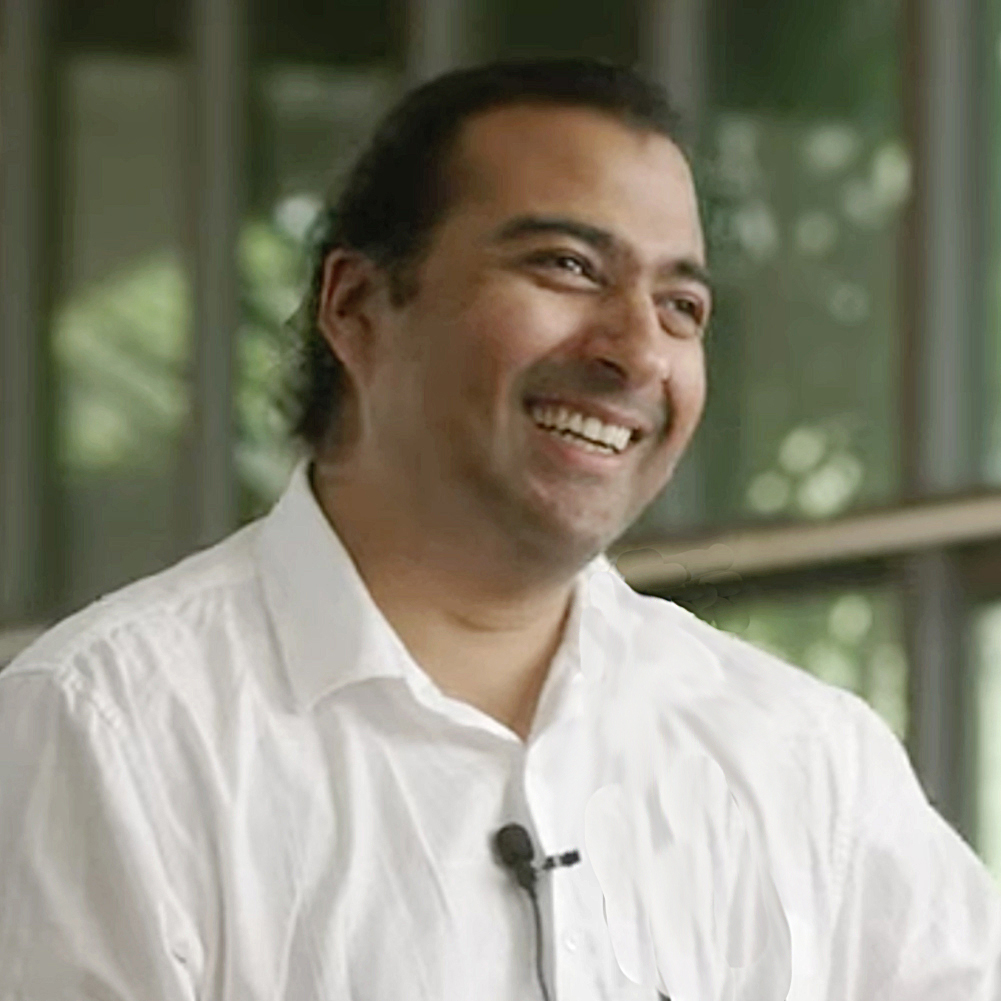
Delson Armstrong
Delson is a respected meditation teacher known for guiding practitioners into profound states including the jhānas, and toward the liberating goal of Buddha’s path. Over many years of training, he studied yoga, Vedic philosophy, and Tranquil Wisdom Insight Meditation (TWIM), allowing him to blend experiential insight with time-tested wisdom. Consequently, his teaching is both practical and deeply rooted in the early Buddhist suttas.
Furthermore, Delson possesses extensive knowledge of Pali and Sanskrit texts, which enables him to present complex teachings with clarity and precision. His books, teachings, and interviews consistently demonstrate mastery of advanced meditative states, dependent origination, and cessation, making him a highly sought-after teacher worldwide.
Delson Armstrong has authored six books about meditation, notably, A Mind Without Craving (2021) and Dependent Origination – Craving (Taṇhā) (2024). They offer detailed, sutta-based teachings suited for committed practitioners available on Amazon HERE.
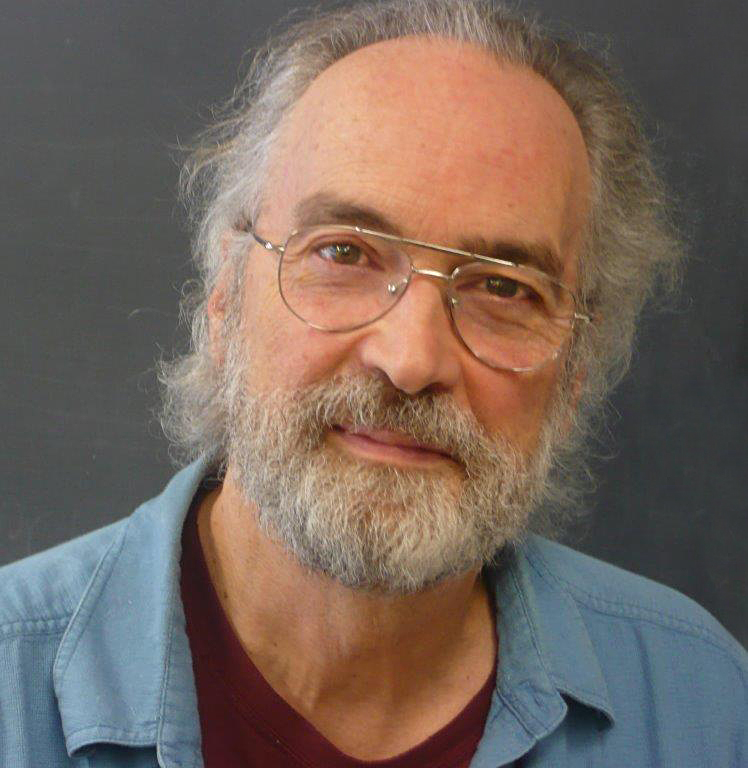
Doug Kraft, M.Div.
Doug is a highly respected meditation teacher, psychotherapist, retired Unitarian Universalist minister, and author. He is widely known for offering advanced meditation instruction that is clear, practical, and grounded in direct experience.
For many years, Doug has guided serious meditators seeking deeper insight and lasting progress. As Guiding Teacher Emeritus of the Easing Awake Sangha, he emphasizes ease, receptivity, and kindness in practice. Rather than striving or forcing concentration, his approach supports the natural unfolding of awareness. As a result, meditators learn to move skillfully through the stages of meditation with clarity and balance.
Importantly, Doug draws directly from the earliest Buddhist teachings. He combines this with decades of retreat leadership and psychological insight. His knowledge and wit provides a rare opportunity to deepen meditation, develop insight, and experience lasting ease and freedom of mind. He is the author of High Altitude Meditation: A Practical Guide to Advanced Buddhist Meditation, along with six more books on meditation available HERE.
Guidelines, Prerequisites, and Options
The course includes guidelines that serve to support safe and effective meditation for everyone They uplift the heart and mind and incline toward the noble goal of liberation.
- Arrive at the retreat with a firm foundation of consistent daily practice.
- Maintain the eight precepts of conduct which includes not eating past the noon day meal until breakfast
- Observe meditative silence except during group meetings and private interviews where discussion is encouraged.
- Secure mobile devices with the retreat manager
- Be seated at the start of group meetings and interviews
- Cling to nothing
Optional practices may include the following:
- Indoor walking meditation inside the chapel, on campus walkways, drives and nature trails
- Practice periods and mealtimes may be modified in consultation teachers
- Kriya yoga practice 8:00 AM daily
In this video, Delson describes attaining cessation as the highest mundane state in meditation. There is a compelling discussion following the talk about entering into cessation including skill need to overcome obstructions to attainment of cessation.
“Realisation is not acquisition of anything new nor is it a new faculty. It is only removal of all camouflage” ― Ramana Maharshi
California Retreat Center
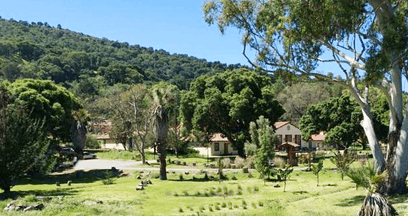
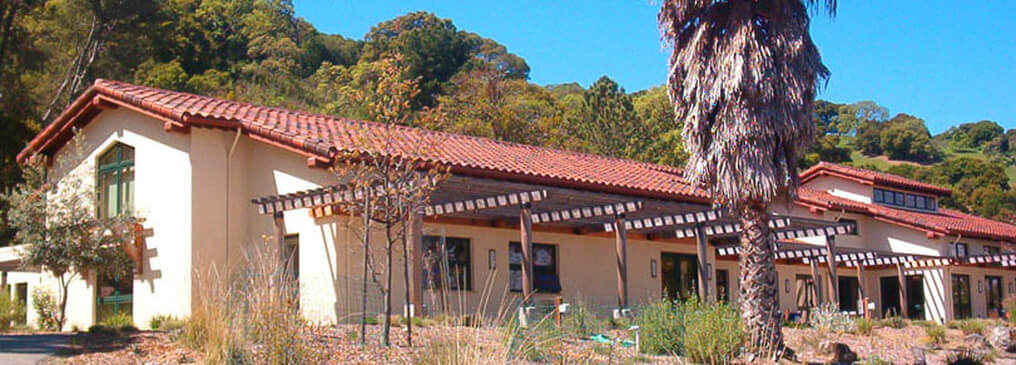
Located 83 miles south of San Francisco International Airport. St. Francis Retreat Center is ideal for immersive meditation. The center is situated on a sunny hillside only a few miles from the historic town of San Juan Bautista east of Monterey Bay. The contemporary Spanish-style building complex is nestled among shade trees, a lake, and vineyards on 70 acres of rolling hills and meadows.
Spacious outdoor practice areas are ideal for walking meditation. There are hillside walking trails and a lake path to maintain regular exercise. Outdoor benches with spectacular views of the Hollister Valley. St. Francis Retreat center offers 72 acres for outdoor walking meditation that fosters beauity and serenity for mind and body.
Comfortable rooms have been recently renovated. All rooms include a private bathroom with a shower, comfortable beds, pillows, linens, blankets, towels, washcloths, and soap. A desk with reading lights provides warm accommodation on chilly California nights. The group meditation space and chapel are available for 24 hour practice. There is ample indoor walking space in the chapel and shaded outdoor space for sitting and walking practice.
Dining

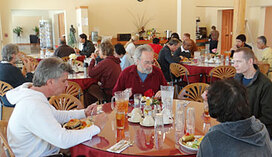
The dining room has spacious indoor and outdoor patio seating with panoramic views of lawns and gardens. Two meals a day are served buffet style. Both offer vegetarian or meat/fish entrees with gluten-free options, salads, fruits, and side dishes. Hot and cold beverages, including tea, hot chocolate, and coffee, are available 24/7. Refrigerated food storage is available to those with special dietary needs or eating disorders that require supplementing tbe standard menu.
Retreat Schedule
Practice times and rest periods are based on individual needs and goals. Morning group meditation and evening dhamma discussion sessions are optional. For interviews, please arrive early in the waiting area outside the casa Maria then wait to be notified. During your interview, Delson and Doug will advise self-directed modes of meditation based on your individual needs and goals. This schedule is subject to change before and during the retreat.
First Day: Sunday, July 31
- 4:00 - 5:00 PM Check in, Upper Building Main Conference Room
- 5:00 - 6:00 PM l Orientation, Upper Building Main Conference Room
- 6:00 - 7:00 PM Dinner
- 7:00 - 8:00 PM Delson and Doug's Opening Remarks
Monday, August 1–Saturday, Aug 6
- 6:30 am Wake up (BELL)
- 7:00 am Group Precepts followed by Meditation
- 8:30 am Breakfast (BELL)
- 9:30 am - 12:30 Self-Directed Meditation and Interviews
- 12:30 - 2:00 pm Lunch/Rest (BELL)
- 2:00 - 6:00 pm Self Directed Meditation and Interviews (BELL)
- 6:00 - 8:30 pm Optional tea break or continued meditation (BELL)
- 6:00 - 7:00 pm Group meeting (BELL)
Last Day: Sunday, August 7
- 6:00 am Wake up (BELL)
- 6:30 am Group Precepts followed by Meditation,
- 8:00 am Breakfast and Social time (BELL)
- 9:00 am - 10;00 Departure
Reservation and Payment
This is a non-profit retreat. The teachings are offered by Delson and Doug free of charge, however they are greatful financial support which they relay upon to continue teaching. The fees cover fixed costs at St. Francis Retreat Center, including food, lodging, insurance, and direct operating expenses. Retreat and administrative tasks are done by unpaid volunteers.
Pay a deposit or make full payment to secure at reservation for the retreat. A balance of payment is due by June 30, 2026.
Single Occupancy Room $1,399
Double Occupancy Room $1,999
Refund Policy
- To register, complete the registration form below and pay for the retreat.
- If the retreat is cancelled for reasons beyond our control, payments will be refunded minus the standard bank processing fee of 2.9% and will be credited to the original source of payment within ten banking days.
- Cancellations before June 30, 2026 will be refunded minus the standard bank processing fee of 2.9% and will be credited to the original source of payment within ten banking days.
- Cancellations after June 30, 2026 are not refundable. After that date, fees paid will be credited toward payment for future retreats or events hosted by the TWIM.network for up to 24 months following the cancellation date.
- Contact retreats@TWIM.network with any questions about this retreat. Please include the retreat name in the subject line.
The retreat is administered and staffed entirely by volunteers from the TWIM Network, a California 501c3 charitable organization.
Travel by Air
Those arriving at SFO by air may reserve ground transportation and are responsible for emailing their arrival and departure information to the retreat manager. Late arrivals or those arriving at Oakland or San Jose airports are responsible for personal transportation to the retreat center and return at their own expense. Travelers are advised to check in for departing flights 90 minutes before domestic and 2 hours before international departures.

Optional Airport Ground Transportation

St. Francis Retreat is located approximately 83 miles from San Francisco International Airport (SFO). Participants traveling by air will require round-trip ground transportation between SFO and the retreat center. The retreat team is available to assist with coordinating group transportation arrangements for those arriving at SFO. Reservations for ground transportation opens for sign-up on June 15, 2026. Those requesting ground transportation will be contacted at that time.
When booking flights, please ensure sufficient time is scheduled for connections connectng flights and with ground transportation. For planning purposes, participants are advised to arrive at SFO to connect with ground transportation for departure to the retreat center at approximately 1:00 PM, Sunday, July 31, 2026. Plan to return to SFO at approximately 11:30 AM on Sunday, August 7, 2026. Book flights accordingly.
A reliable airport shuttle service will convey participants roundtrip. Those who have indicated a requet for group transportation will be contacted by the Retreat Manager (retreats@TWIM.network) with details.
Hotels near SFO
Early arrivals or staying overs are advised to select a hotel from the list below. These are modestly priced hotels that near the ariport with low cost taxi service avaiable 24/7, Free Wi-Fi, and complementary breakfast. Cheaper rates may be available through Hotels.com. Kayak.com, and other Web-based portals.
The hotels listed below are located only a few miles proximity of SFO in a commercial district with many nearby restaurants.
Millwood Inn & Suites
- 1375 El Camino Real, Millbrae, California 94030
- Contact: 650-583-3935
- Email: info@millwoodinn.com
Days Inn San Francisco International Airport West
- 1550 El Camino Real, San Bruno, California 94066
- Contact: 650-616-9600
- Email: info@daysinnsanbruno.com
La Quinta Inn & Suites, San Francisco Airport West
- 1390 El Camino Real Millbrae, CA 94030
- Phone: 1-650-952-3200
Driving Directions
- St. Francis Retreat 549 Mission Vineyard Rd, San Juan Bautista, CA 95045
Google or Apple maps will the the prefered way to navigate to the center.
From SFO drive south on Highway 101 for 83 miles.
- Exit Hwy 101 onto Hwy 156 East at the San Juan Bautista/Hollister exit
- After about 3 miles on 156, turn right at the signal onto The Alameda.
- Drive for about .5 miles.
- Turn left onto Mission Vineyard Road, continue straight about 0.8 miles.
- Enter a private drive posted with a sign for St. Francis Retreat. Drive slowly for 1.5 miles from this point.
- Park on either side oft he lower building.

Driving Map
From I-5
- Exit onto CA-152 W/E Pacheco Blvd. and continue to follow CA-152 W for 35.3 mi
- Keep left to continue on Hwy 156 W/CA-156 W, follow signs for Hollister,14.1 mi
- Follow Mission Vineyard Rd to your destination 2.2 mi
- Turn left onto Old San Juan Hollister Rd 253 ft
- Turn left onto Mission Vineyard Rd 0.5 mi
- Turn left to stay on Mission Vineyard Rd 0.3 mi
- Turn right to stay on Mission Vineyard Rd 1.2 mile
Arrival and Check-in
Check-in at St. Francis at the upper lobby between 11:00 and 12:00 noon. Parking is available next to the lower building. The chapel in the lower building is the location for group meditation and Dhamma talks. On the first day, the buffet lucnch is 12:00 noon to 1:00 PM followed by orientation. Check the posted schedule for details.
The retreat ends after the morning meditation on the last day of the retreat, with time for breakfast, socializing, taking photos, and packing.
Emergency Contact Numbers
There is no public phone in the facility. If your family needs to reach you in an emergency, they may call these emergency contact numbers.
Retreat Manager, Scott Jordan cell phone: 415-250-5294
St. Francis Retreat business office phone: 831-623-4234
St. Francis Retreat emergency after-hours phone: 831-207-7042
Detailed Retreat Information
What to Wear:
The weather in San Juan Bautista is typically sunny with cool, clear nights. The average daytime temperature is 72ºF (20ºC), and the average nighttime low temperature is 45ºF (8ºC). Rain is unlikely, but be prepared to bring an umbrella or other wet weather gear for outdoor walking.
Bring comfortable, loose-fitting clothes, such as sweatpants with elastic waistbands. Be prepared with layers that can be added or removed. A warm jacket is needed for cold nights and evening walking meditation. Comfortable slip-on shoes are appropriate for walking around the compound. Headgear, such as a hat with a brim, and sunglasses are handy for sunny days.
What to Bring for Meditation:
The meditation hall will provide chairs for sitting. You can bring your meditation chair, meditation cushions or pillows, benches, and floor pads. House slippers and warm socks are appropriate in the meditation hall. Bring a shawl or small blanket for indoor and outdoor seated meditations in the gardens and patio areas.
Other Necessities to Bring:
The center provides bed linens, blankets, and towels. However, you may want to bring a unique personal pillow or blanket. You should also bring personal toiletries (toothpaste, bath soap, sunscreen, Kleenex, etc.), a flashlight or headlamp, an alarm clock or watch with an alarm, and a water bottle to fill at the center with filtered water. A wake-up and notification bell will announce meals and group gatherings. If required, you should bring COVID-19 supplies.
What to Leave at Home:
Do not bring valuables, nonprescription drugs, or alcohol. Only bring food if you have made prior arrangements with the retreat managers to accommodate special dietary needs.
Avoid using scented cosmetics or perfumes that may be allergenic to others. Reading and writing are discouraged during this training period, except during the evening dhamma talks. Candles, incense, and smoking are prohibited in any building or room.
Clocks and Phones:
Please take care of personal matters before coming so we don’t have to hamper your progress in meditation. To support the practice of silence, participants’ cell phones, tablets, and computers will be collected at the beginning of the retreat and held in a secure area until breakfast on the last day.
Emergency Phone Numbers:
There is no public phone in the facility. If your family needs to reach you in an emergency, they may call these emergency contact numbers.
Retreat Manager, Scott Jordan cell phone: 415-250-5294
St. Francis Retreat business office phone: 831-623-4234
St. Francis Retreat emergency after-hours phone: 831-207-7042
Interacting with Monastic Teachers and Participants
- Physical contact: Refrain from shaking hands or hugs.
- Greeting: The traditional greeting is to have both hands held together in an attitude of prayer.
- Entering a room: Please be seated before starting a conversation. Stand up when the teacher enters or leaves the room to demonstrate respect. Remain standing until he or she is sitting or has departed.
- Attentiveness: Please do not cross your arms or legs during the conversation. It is considered rude to point the soles of your feet at a Buddha image, monk, nun, or lay teacher.
- Timeliness: Be present and seated at the scheduled starting time and plan your questions to respect the end time.
- Conversation topics: Though you’re welcome to have enjoyable conversations about the dhamma and the practice, refrain from asking personal or potentially unreverent questions. For example, this includes asking for value statements about other practices or religions, individual attainments, or potentially controversial topics (i.e., COVID).
- Generosity: donations (Dana) are gratefully accepted. These teachers live by the Dhamma. Your generosity directly supports his ability to teach. Though physical gifts are appreciated, they are impractical while they travel.
Simplicity and Renunciation
Meditation retreats offer a sacred space protected and removed from the world. They allow participants to look deeply inside, quiet their minds, and open their hearts. The most beneficial and rewarding spiritual life experiences often happen at a meditation retreat. The sheltered and quiet setting is crucial for developing patience, steadfastness, lovingkindness, generosity, joy, and wisdom.
These are the seeds that grow insight, compassion, and happiness. Participants are requested to let go of concerns for daily life and embrace an attitude of simplicity and renunciation by adopting a traditional spiritual practice called “taking what is offered.”
Taking What is Offered
- Taking any Residence—whatever quarters are offered. We ask participants to happily accept the assigned accommodation and continue practicing this spirit throughout the retreat.
- Taking Food that is Offered—Happily accepting food that is offered is part of the practice. The cook lovingly prepares tasty and nutritious meals. Gluten-free alternatives will be available for those with medically required dietary restrictions. Participants with other special dietary needs may arrange with the retreat manager to bring supplemental food items with them to the retreat. Food is prohibited in rooms and the meditation hall. The kitchen is restricted to St. Francis staff.
- Silence – In fostering an atmosphere of contemplation and meditation, participants are expected to embrace the practice of silence during the retreat. Living in silence is the practice of observing within and not communicating with others. This includes reading or writing, telephones, computers, email, or text messages. Talking is permitted during the evening dhamma talks and teacher interviews when questions are encouraged. Inquiries about the retreat may be directed to a retreat manager or whenever necessary in the case of an emergency.
- Serving the Community—Participants may volunteer for community duties as a daily form of meditation. This activity acquaints participants and helps the retreat function smoothly. A sign-up sheet for daily retreat jobs will be available at registration.
Simplicity and Renunciation print version download
Simplicity and Renunciation
COVID-19
There are currently no COVID-19 public health safety state or local mandates. There are no vaccination requirements at St. Francis Retreat Center. As a precaution, we ask that participants do a home test before they arrive. As an additional safety measure, take another home test on the opening day of the retreat and a further test on the following morning.