
Certified TWIM Instructors

TWIM instructors are dedicated meditators committed to the path of practice and teaching. First, the principles of the Four Noble Truths and the Noble Eightfold Path, as taught in the earliest Buddhist suttas. These qualities are lived and embodied in teaching and daily life. Second, each instructor has completed many years of intensive TWIM meditation practice, formal training, and supervised experience guiding students through the stages of meditation (jhānas). Therefore, instruction is grounded in direct knowledge rather than theory alone.
Finally, their understanding is shared with enthusiasm and care so that students can develop meaningful results and steady progress toward the goal of awakening. Through this approach, TWIM instructors provide reliable guidance based on ethical conduct, disciplined practice, and experiential insight.
Remembering Teachers and Friends
Aspirations and Qualities
Ethical conduct: They uphold the Buddhist precepts and act with honesty, responsibility, and compassion in daily life.
Deep meditation practice: They maintain a well-established personal practice, often supported by many years of systematic training.
Embodiment of the Dhamma: They live the teachings through mindfulness, patience, kindness, and wisdom.
Clear and skillful communication: They present Buddhist principles and meditation instruction in ways that are accessible, practical, and responsive to individual students.
Compassion and empathy: They create a safe and supportive learning environment that encourages insight, confidence, and joy in practice.
Together, these qualities ensure that TWIM instructors provide reliable guidance rooted in experience, ethics, and care.
The Founder and first TWIM Teacher
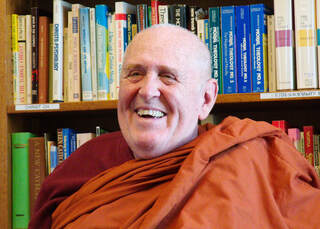
Venerable Bhante Vimalaramsi
He was founder of the Tranquil Wisdom Insight Meditation (TWIM) and developed the Six R’s as a simple, practical way to apply the Buddha’s teaching of Right Effort. After decades of intensive meditation and study of the earliest Buddhist texts, Bhante created this clear sequence of steps that lessend distractions and dissolved the root causes of suffering. He taught hundreds of other Buddhist monks, nuns, and lay followers. He mentored and guided many to become teachers oftern referred to as guides.
Firstly, he explaind that Right Effort as described in the suttas, is not only about how to meditate but also how to deal with all unpleasant thoughts and emotions. And not just while meditating but also in daily life. Secondly, Bhante discovered that the key lies in consciously engaging a set of actions that let go of unwholesome states and nurture wholesome ones. And finally, he pointed out that unpleasant feelings typically occur as habitual distractions are rooted in craving—the root cause of underlying tensions and tightness felt in the head, neck, and shoulders.
The Six R’s Method.
The Six R’s begin with Recognizing when craving was experienced, Notably as an unwholesome feeling. The next step is Releasing the attention from it. And Relaxing the body completly was next. Re-smile: neaning “Smile with your heart or” smile with your eyes,” he often said. “This is a feeling meditation” He often said . . . “and make it fun”. Simply put, a gentle, sincere smile lightens the mind, making space for joy and spaciousness. With this uplifted attitude, the mind naturally Returns to the meditation object which is typically loving-kindness and Repeat the process whenever the attention is fully distracted.
In conclusion, Bhante emphasized that the roots of unhappiness are not hard-wired into our biology; they are more like mental “software” patterns that can be reconditioned. By applying the Six R’s, habitual craving fades away with modest practice. The mind becomes more peaceful, balanced, and open. When the process matures, the mind experiences full release—the freedom of Nibbāna.
Beginning instructions audio clip. (50 minutes)
Intro to TWIM Practice – Venerable Bhante Vimalaramsi
"This is an "all the time practice" – Bhante
The Six R’s and the Science of Well-Being
The Six R’s method not only reflects the wisdom of early Buddhist teachings but also aligns with modern neuroscience and psychology. By practicing the Six R’s, meditators repeatedly activate and strengthen the parasympathetic nervous system (PNS)—the body’s natural “rest and restore” mode—while balancing the central nervous system (CNS).
For beginners
the Six R’s may be applied every few minutes during meditation. Each time, this gentle cycle reduces sympathetic nervous system over-activation (the “fight, flight, or freeze” response) and allows the PNS to dominate. The parasympathetic system regulates heart rate, digestion, breathing, immune function, and overall repair. When it is engaged, stress hormones like cortisol and adrenaline decrease, while neurotransmitters such as dopamine, serotonin, and oxytocin increase—chemicals strongly linked to calm, joy, and connection. Scientific studies have shown that meditation practices, especially loving-kindness meditation, lower cortisol levels and increase positive affect (Fredrickson et al., 2008; Hoge et al., 2013).
Research
Psychological research also confirms that mindfulness-based practices enhance emotional regulation, resilience, and cognitive flexibility by strengthening prefrontal cortex activity while quieting the amygdala—the brain’s threat detection center (Tang, Hölzel, & Posner, 2015). This means that each time you “Recognize, Release, Relax, Re-Smile, Return, and Repeat,” you are literally rewiring your brain toward greater clarity, peace, and compassion.
Over time
the Six R’s function as a mental reset button, usable not only in meditation but equally important in daily life. Practitioners discover that wholesome states—such as kindness, equanimity, and joy—become the mind’s natural baseline. This shift supports what the Buddha mapped out as the Seven Factors of Awakening: mindfulness, discernment, energy, joy, tranquility, collectedness, and equanimity. Modern psychology would describe these as the foundations of mental health and well-being.
Conclusion
The Six R’s guide us toward liberation by reconditioning the mind away from craving and stress and toward balance, relief, and resulting in awakening.
✅ Scientific Support
Fredrickson, B. L., et al. (2008). Open hearts build lives: Positive emotions, induced through loving-kindness meditation, build consequential personal resources. Journal of Personality and Social Psychology.
Hoge, E. A., et al. (2013). Loving-kindness meditation practice associated with oxytocin release and reduced distress. Psychiatry Research.
Tang, Y. Y., Hölzel, B. K., & Posner, M. I. (2015). The neuroscience of mindfulness meditation. Nature Reviews Neuroscience.
Results
Applying the Six Rs cultivates brain and heart coherence. It aligns the CNS and PNS in homeostasis. This is the optional functioning for biological conditions. The benefits of heart and brain coherence directly affects behavior:
- Feeling whole and wholesome.
- Feeling like you have a place the World
- Feeling peace an contentment
- Feeling free of stress
- Feeling vitality and energized
- Feeling spontaneous and creative
- Feeling connected to people and nature
- Being emotional resilience
- Being intuitive
- Being intellectually honest and clear

Summary
The heart and the brain are deeply connected, and you can sense this connection by practicing heart-brain coherence techniques. Find more about the science and benefits of brain and heart coherence at Heartmath Institute and Alleviant Integrated Mental Health.
Amazon Book Reviews
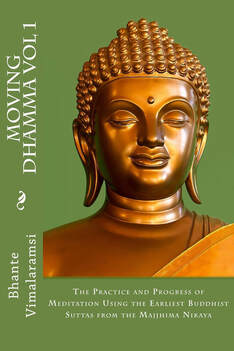
- Here are crystal clear instructions on loving kindness meditation practice. The author claims it’s a principal path to enlightenment that rivals or surpasses the familiar mindfulness of breathing practice which was also taught by the Buddha. Considering the fact this book is under fifty pages, it’s amazing the number of basic concepts touched upon, from posture to hindrances as the author describes the steps involved in what he calls “Tranquil Wisdom Insight Meditation (T.W.I.M.)” which is a loving kindness meditation. As bonus the author discusses 6 R’s to keep your practice on point, and a walking meditation to re-energize it.
- Looking for a brief description to establish a mindful meditation practice? Here’s a wonderful candidate. What could be better than loving kindness?